The End of the Chatbot Era — Why I/O 2026 Was the Tipping Point
From linear, single-shot AI to persistent, autonomous infrastructure
When ChatGPT launched in late 2022, it established a paradigm that has defined enterprise AI adoption for three years: the request-response loop. A user sends a message. The model generates a reply. The loop terminates. This architecture is familiar, safe, and — critically — it maps cleanly onto existing software patterns. It looks like an API call because it is an API call.
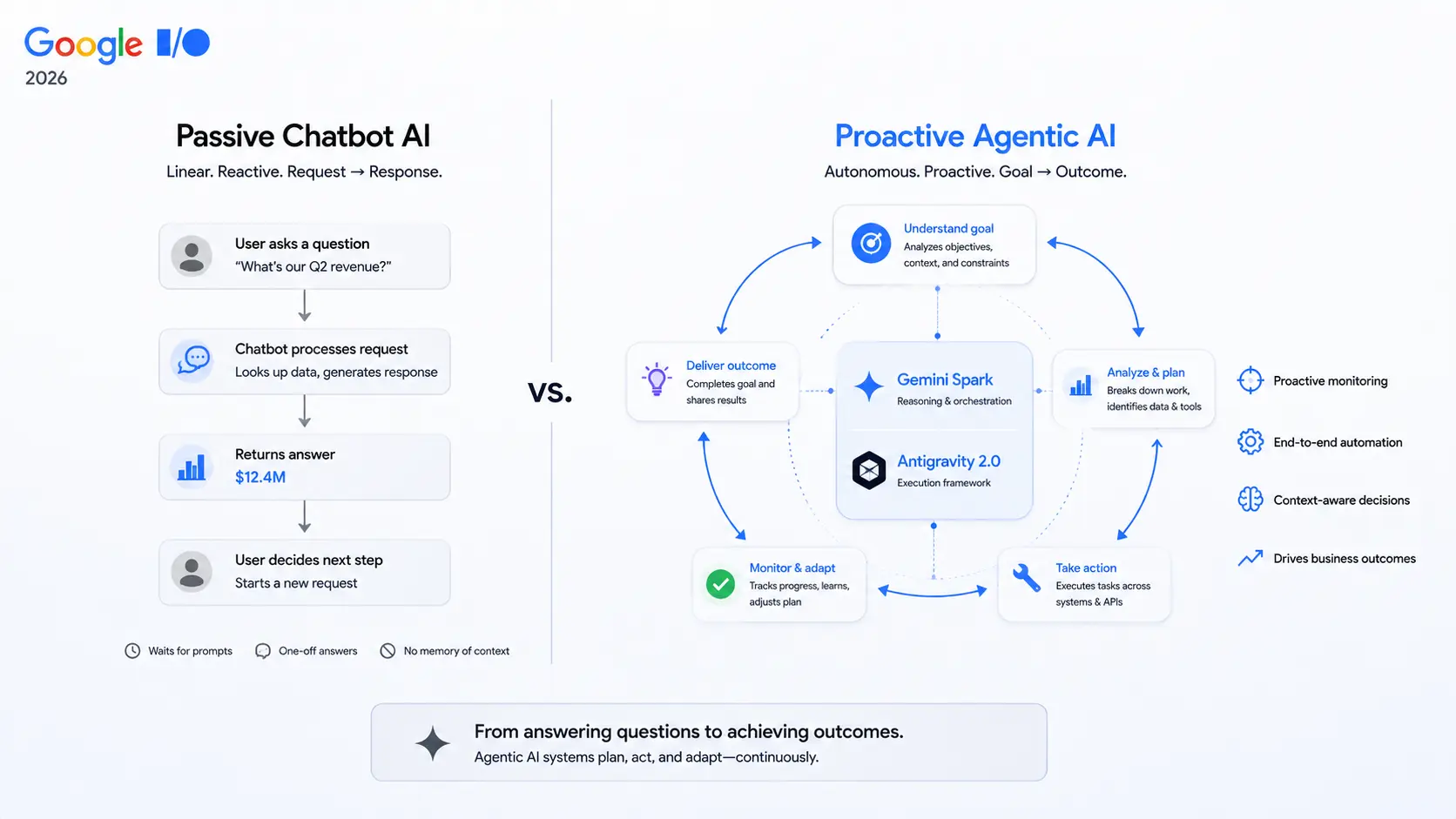
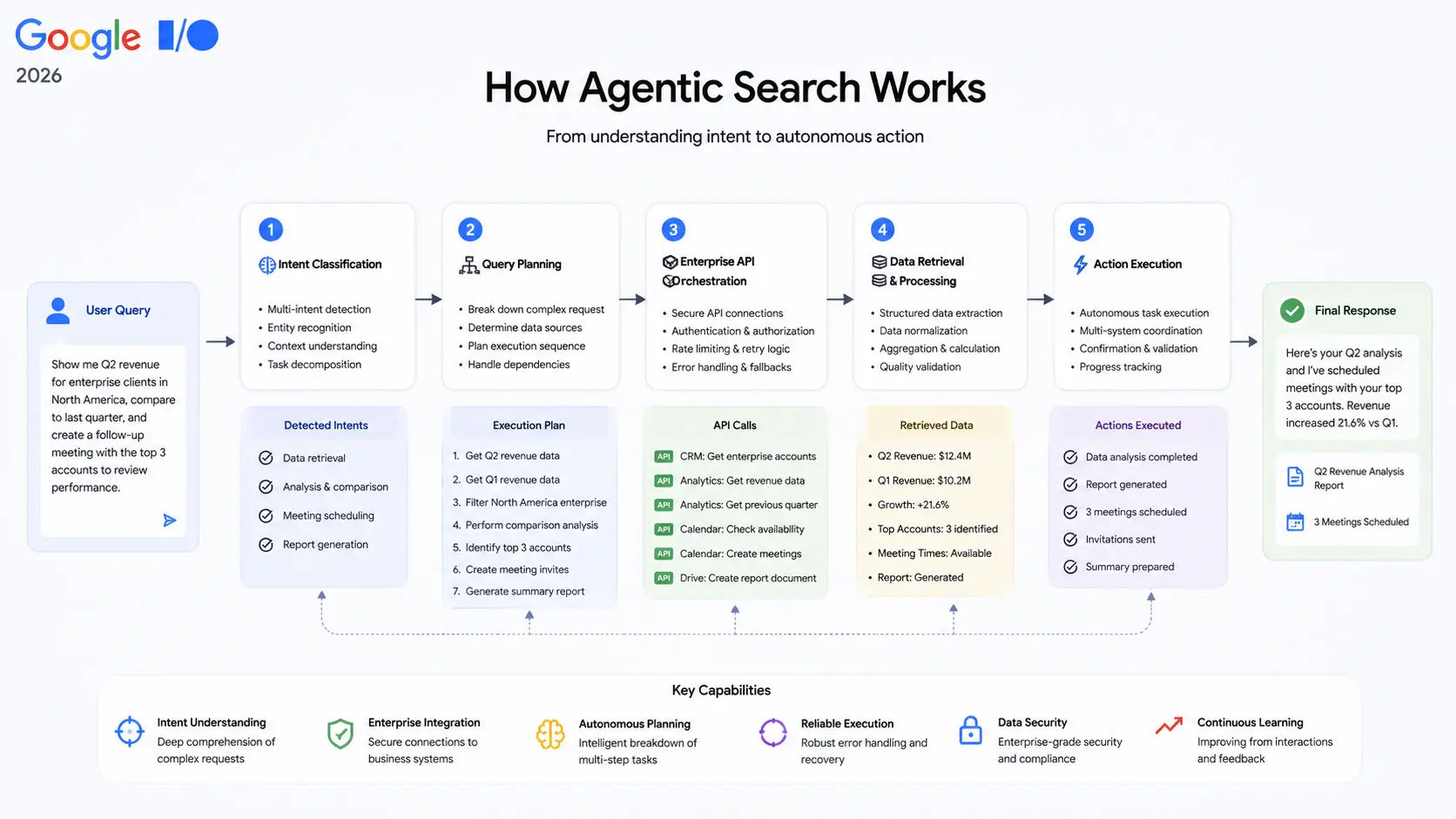
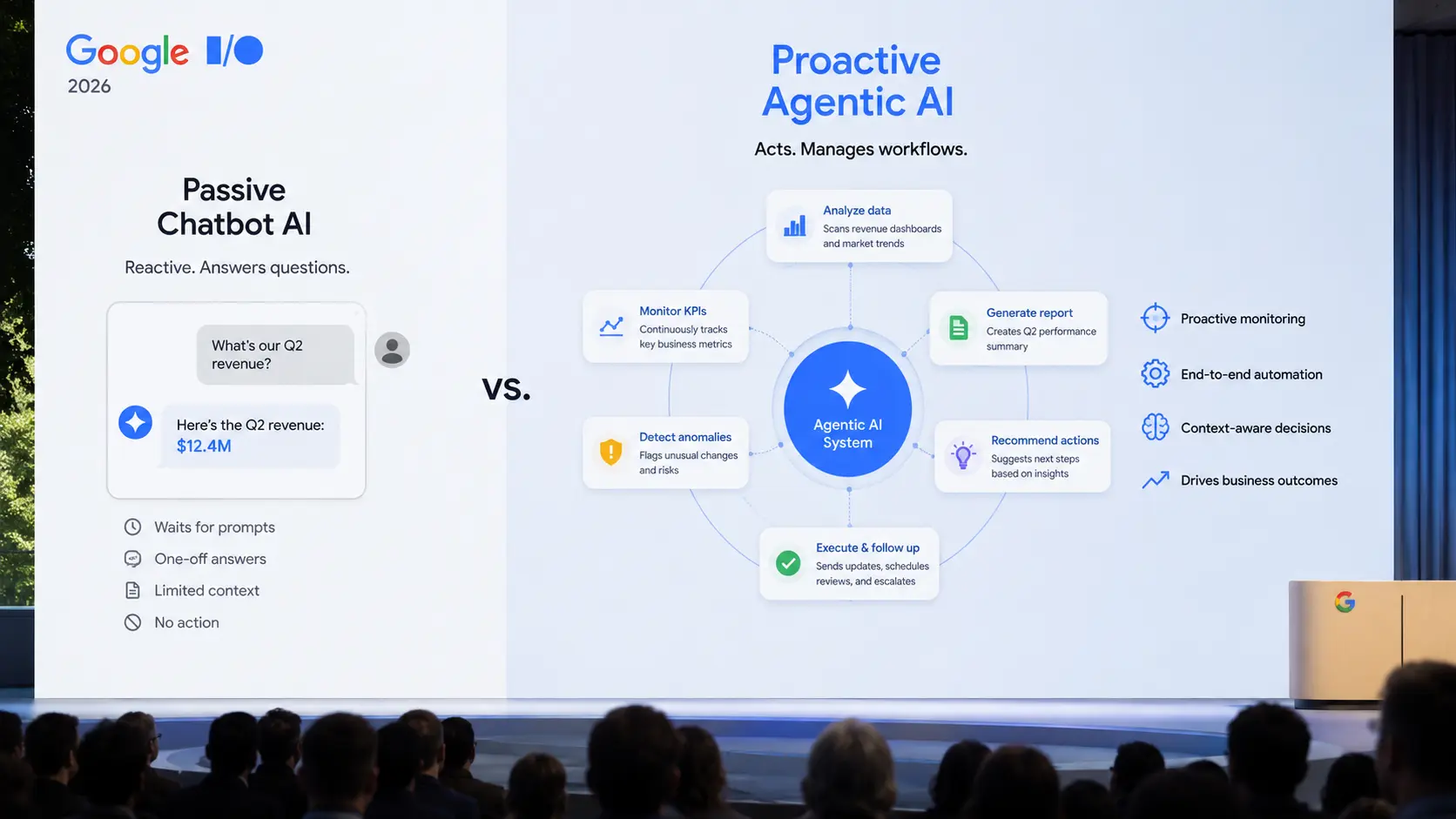
Google I/O 2026 was the industry’s formal announcement that this paradigm is being retired. The centerpiece was not a new language model. It was Gemini Spark and the Antigravity 2.0 agentic framework — a system architecture in which AI agents are not summoned reactively but run persistently in the background, monitoring signals, making decisions, and executing multi-step tasks without waiting for a human to initiate each cycle.
The distinction sounds subtle. It is not. The difference between a chatbot and an agent is the difference between a calculator and a bookkeeper. One computes on demand. The other manages your accounts continuously, flags anomalies, initiates payments, and alerts you only when your attention is genuinely required. That is not a UX upgrade. That is an infrastructural rearchitecture of what “AI in the enterprise” means.
💡 Architect’s Perspective
In seven years of systems deployment, I have seen this pattern before: the shift from batch processing to stream processing, the shift from server-based to serverless compute. Each time, organizations that treated it as a tooling change rather than an architectural shift spent two years rebuilding what they should have designed correctly from the start. The agentic shift is that kind of change.